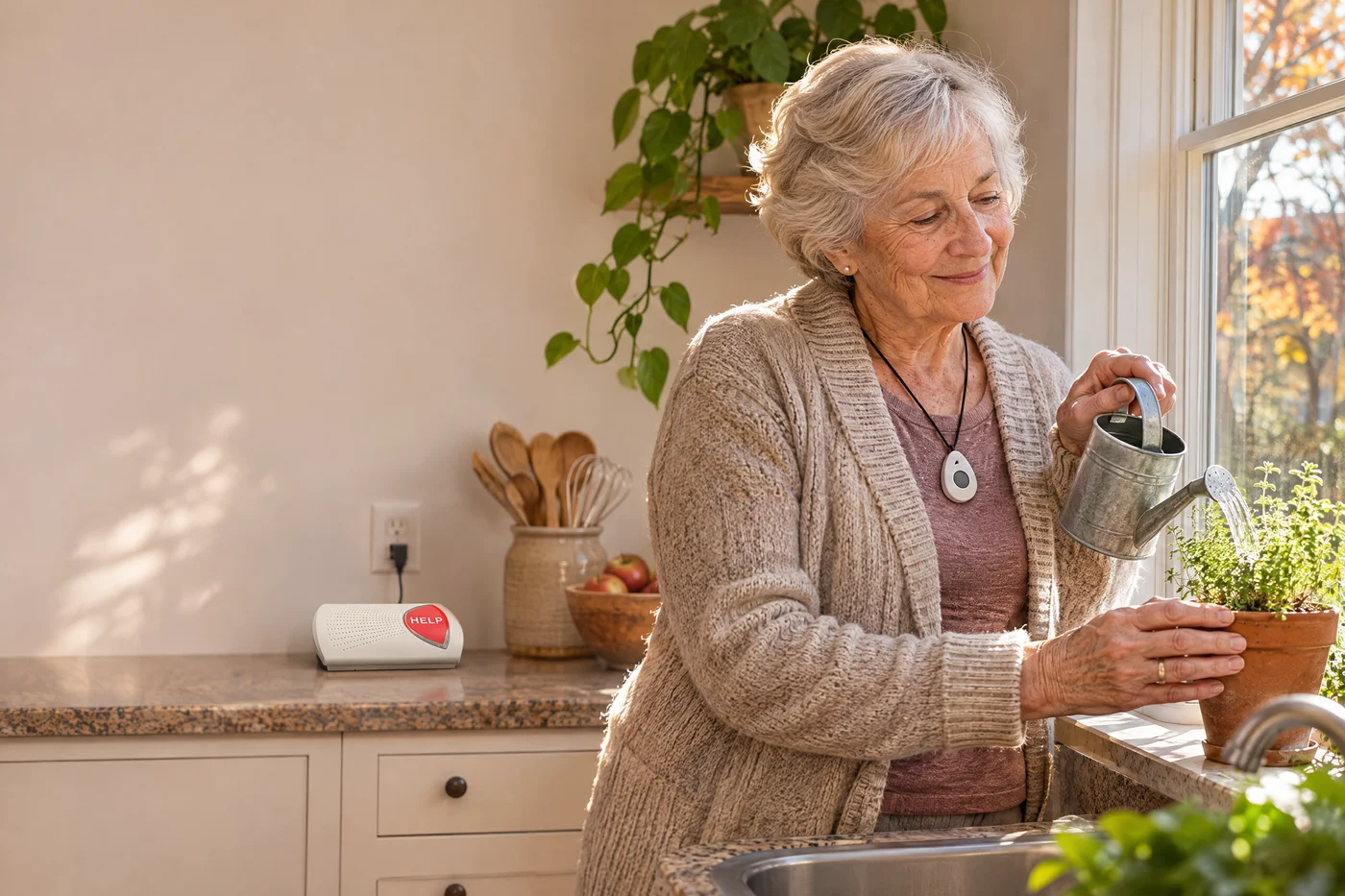
Most older adults want to keep living in the home they know. In AARP's national 2024 survey, 75% of adults 50 and older said they want to stay in their current homes as they age. Aging in place – staying in your own home as you get older instead of moving to assisted living – can be a realistic plan for many families. Senior safety at home usually comes down to three things: a home that is set up well, a simple routine of family check-ins, and an easy way to reach help any hour of the day.
Why do most older adults want to stay in their own home?
Home is familiar, it holds a lifetime of routines, and it keeps people close to neighbors, friends and the places they love. For many people, staying home simply is independence.
The National Institute on Aging (NIA) puts the timing plainly: the best time to think about how to age in place is before you need a lot of care. Planning early lets your parent make the important decisions while they are fully in charge of them – and it turns "Should Mom move?" into a calmer question: "What would help Mom stay?"
What makes staying home feel safe enough?
There is no single fix. Staying home works best as a small plan with a few parts that support each other.
1. A home that is set up for the next chapter. NIA suggests going room by room and fixing the obvious things first, such as loose stair railings and poor lighting. Other simple steps it recommends: grab bars by the toilet and in the tub or shower, night lights near the bed, and a light that stays on in the bathroom at night. Our home safety checklist and simple home modifications articles walk through each room.
2. A routine of staying in touch. NIA recommends arranging daily contact with a family member or friend. A morning text, an evening call, a neighbor who waves from the porch – small habits like these keep everyone connected without anyone feeling watched.
3. The right help for everyday tasks. NIA lists the kinds of help people often add over time: personal care, household chores, meals, money matters, health care and rides to appointments. Some of it comes from family; some from community services. Your local Area Agency on Aging is a good first call.
4. A simple way to reach help, 24/7. Falls are common as we age – the CDC reports that more than 14 million older adults, about 1 in 4, report a fall each year. Nobody plans for that moment, which is exactly why it helps to have a way to reach a person without needing to get to a phone.
How does a 24/7 monitored help button work?
It is simpler than most people expect:
- Press the button. The help button is worn as a necklace or a bracelet, and the In-Home system can also include a wall button – handy in the bathroom.
- A U.S.-based operator answers, 24/7. Day or night, a trained person talks with you and asks what is going on.
- They call the right people. Depending on what you need, the operator contacts family or calls 911.
A few details families often ask about:
- No landline needed. The system works without a home phone line.
- At home and on the go. The In-Home system covers the house; the small On-the-Go device with GPS goes with your parent to the store, church or the park.
- Fall detection is available for added peace of mind.
- Family stays in the loop with the Caregiver App.
- Spanish support is available.
The NIA itself lists an emergency medical alert system as one option for people who want to keep living at home.
Can a medical alert replace assisted living?
No – and it is important to be honest about that. A medical alert does not replace hands-on care, assisted living or medical help. What it can do is be one part of a plan for someone who is still mostly independent and wants to stay home: it makes help reachable at any hour, and it gives the family more peace of mind between visits.
If your parent already needs daily help with bathing, dressing or medications, talk with their doctor, a geriatric care manager or your Area Agency on Aging about what support makes sense at home.
How to bring it up with Mom or Dad at Thanksgiving
Holiday visits are often when families notice small changes. They are also a good time for a kind, unhurried conversation. You would not be alone in finding it hard to start: in The Senior List's 2026 survey, only 26% of adult children said they had discussed medical alert devices with their parents.
A few things that help:
- Start with what they want. "You love this house. What would make it easier to stay here for a long time?"
- Ask, don't decide. Let your parent lead. Their wishes and their safety can both be part of the plan.
- Keep it practical. Talk about routines and check-ins, not worst cases.
- Try before deciding. A 30-day risk-free trial lets your parent see how it fits into daily life.
- Read something together. Our free printed guide is made for exactly this conversation.
Is staying home realistic? A quick checklist
Staying home is often a good fit when most of these are true:
- Your parent wants to stay and can manage most daily tasks, with some help.
- The main walkways, stairs and bathroom are well lit and clutter-free.
- Grab bars are in place by the toilet and in the shower or tub.
- Someone checks in every day – in person, by phone or by text.
- Help with chores, meals or rides is lined up when it is needed.
- There is a way to reach a person 24/7 from anywhere in the home – and outside it.
- The family has talked about what would change the plan, and when to revisit it.
Frequently asked questions
Is aging in place a good option for someone who lives alone?
It can be. Many people live alone and stay independent at home with a well-set-up house, daily check-ins and a way to reach help 24/7. Revisit the plan together as needs change. See also Living Alone After 65.
Do you need a landline for a medical alert?
No. 24 Rescue Alert systems work without a landline.
Does a medical alert work outside the house?
Yes. The On-the-Go device with GPS goes with your parent, so help is one press away at home and on the go.
Who answers when you press the button?
A U.S.-based operator answers 24/7, talks with you, and contacts family or calls 911 depending on what you need.
Staying home can be the plan
Wanting to stay home is not stubbornness – it is how most of us picture growing older. With a safer home, a routine of check-ins and help that is one press away, it can be a realistic plan your whole family feels good about.
Clear answers on paper, mailed to your door. No cost or obligation. It usually arrives within 5–7 business days by U.S. mail.
Prefer to talk it through?
Book a free call with a medical alert specialist – no pressure, just answers. 30-day risk-free trial · free standard shipping · Se habla español.
Sources
- AARP – 2024 Home and Community Preferences Survey (Dec 10, 2024)
- National Institute on Aging – Aging in Place: Growing Older at Home
- National Institute on Aging – Preventing Falls at Home: Room by Room
- National Institute on Aging – Falls and Fractures in Older Adults: Causes and Prevention
- CDC – Older Adult Falls Data
- The Senior List – 2026 Medical Alert Device Usage Report
This article is for general information and is not medical advice. Talk with your doctor about what is right for you. In an emergency, call 911.